0
Electric vs Diesel Forklift: Which Is Better for Your Operation?
Introduction
Choosing between battery-electric and diesel-powered trucks depends on how each power source fits the site, workload, and operating requirements. Both can support demanding material handling, but the better fit depends on where the truck will work, how long it will run, the loads it must handle, and whether the site can support charging or refuelling. Site conditions, duty cycle, load requirements, and access to charging or refuelling provide a more useful basis for comparison. This article explains the main differences to consider before you decide.
Key Takeaways
- Electric models are often well suited to enclosed facilities because they produce no tailpipe emissions at the point of use and generally operate more quietly.
- Diesel-powered trucks can suit intensive outdoor work where quick refuelling and long operating periods are important.
- The decision should consider duty cycle, load requirements, infrastructure, maintenance, energy or fuel costs, and the truck’s specifications.
How Do Electric and Diesel Forklifts Differ?
Battery-powered trucks use rechargeable batteries to supply the drive and hydraulic systems. Depending on the model, the power source may be lead-acid or lithium-ion. A diesel-powered forklift uses an internal-combustion engine and is refuelled rather than charged.
That basic difference changes how the truck fits into daily operations. Battery-electric models produce no exhaust emissions at the point of use and typically create less operating noise. Diesel-powered trucks, by contrast, can usually return to service soon after refuelling but bring engine-related servicing and exhaust-management considerations.
For businesses comparing electric and diesel forklifts, the key question is how those characteristics affect the site, not which technology looks stronger on paper.
Which Is Better for Indoor and Outdoor Work?
Indoor warehouses, production areas, and distribution centres often favour battery-electric equipment because ventilation, noise, and air quality can matter. Workplace guidance on vehicle exhaust recommends avoiding diesel-powered vehicles indoors where practicable and considering battery power as an alternative.
An electric forklift can therefore be a practical choice where the required capacity is available, and the site has suitable charging space and electrical capacity. However, charging arrangements must still fit the working schedule.
Diesel-powered trucks remain common in yards, loading areas, and industrial environments. Outdoor suitability still depends on the specific truck, including tyre choice, ground clearance, stability, weather protection, gradients, and surface conditions. Comparing electric and diesel forklifts should not reduce an application decision to indoor versus outdoor use alone.
How Does the Duty Cycle Affect Your Choice?
A truck used intermittently on one shift has different energy requirements from equipment working across long or multiple shifts. The forklift duty cycle should therefore be assessed before choosing a power source.
Battery-electric equipment needs a charging plan that matches the operating pattern. A single-shift operation may have enough downtime for charging between working periods, while longer schedules may require opportunity charging, lithium-ion technology, additional batteries, or additional trucks, depending on the equipment and application.
Diesel-powered equipment can generally be refuelled quickly, which may reduce interruption where long operating periods are required. However, quick refuelling should be considered alongside fuel storage, site rules, maintenance, and actual utilisation.
What Are the Differences in Operating Costs?
Purchase price alone does not show the full financial picture. Forklift operating costs can include energy or fuel, servicing, parts, batteries, chargers, charging infrastructure, downtime, and eventual replacement requirements.
Battery-electric trucks have fewer engine-related service items, but businesses still need to account for battery condition, charging equipment, and battery replacement over the truck’s working life. Diesel-powered equipment requires fuel and routine attention to engine-related components, filters, fluids, and the fuel system.
The most useful cost comparison is therefore based on total cost of ownership over the expected operating period. A truck with a lower purchase price can still cost more to run if energy use, maintenance, downtime, or utilisation does not suit the application.
Does Diesel Automatically Mean Better Performance?
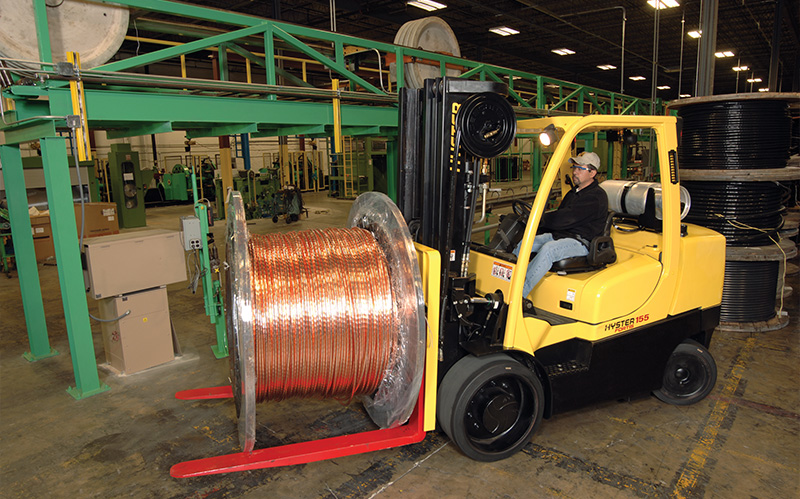
Diesel power is widely associated with demanding outdoor work, but fuel type alone does not determine lifting ability. Rated capacity, load centre, lift height, mast configuration, attachments, travel conditions, and operating pattern all affect what a truck can do.
Electric equipment is available beyond light warehouse duties, while diesel remains suitable for many heavier outdoor applications. Hyster-Yale’s current material handling equipment range, for example, includes both electric and internal-combustion categories across different applications.
For that reason, when comparing electric and diesel forklifts, focus on the specifications of the trucks you are considering. A higher-capacity or more demanding application does not automatically make diesel the correct choice.
The main operational differences can be summarised as follows.
| Factor | Battery-electric | Diesel-powered |
|---|---|---|
| Operating environment | Often suited to indoor and enclosed operations | Often suited to yards and outdoor work, subject to site and truck specifications |
| Energy supply | Requires charging infrastructure and suitable downtime | Requires refuelling access and fuel management |
| Longer duty cycles | Depends on charging strategy, battery technology, and available capacity | Quick refuelling can reduce interruption during long operating periods |
| Maintenance | Battery and charger care, without engine-related servicing | Engine, filter, fluid, and fuel-system servicing |
| Emissions at point of use | No tailpipe emissions | Produces exhaust emissions |
| Selection focus | Capacity, site conditions, charging access, and utilisation | Capacity, site conditions, refuelling access, and utilisation |
Electric or Diesel: Which Forklift Should You Choose?
The decision becomes clearer when you translate operating conditions into practical requirements.
Battery-electric models may be suitable when the truck works mainly indoors, lower operating noise is needed, charging fits the schedule, and the required capacity is available in an electric model.
Diesel-powered trucks may be suitable when most work takes place outdoors, the operating period is long or intensive, rapid refuelling is important, and the site already supports diesel use.
Some fleets may benefit from both. Battery-electric equipment can handle warehouse movement while diesel-powered trucks support yard or loading work. If demand changes over time, forklift leasing arrangements may also give businesses another way to adjust capacity without treating every requirement as a permanent purchase.
Conclusion
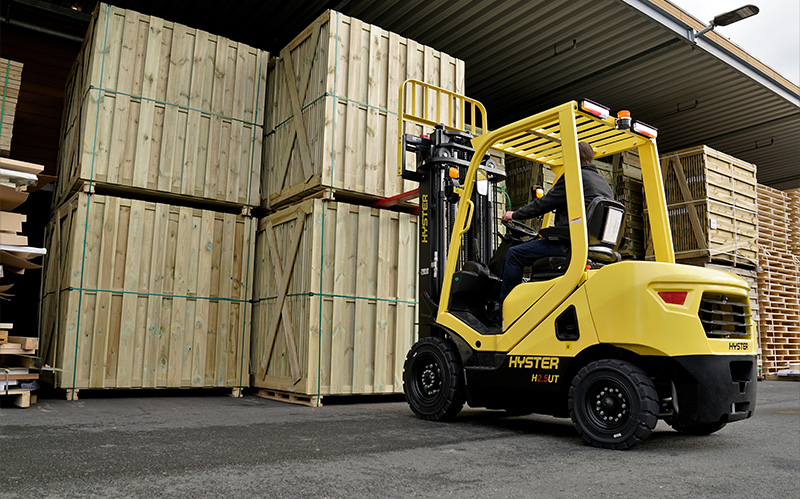
There is no universal winner between electric and diesel forklifts. The better option depends on the working environment, utilisation, load requirements, infrastructure, and total cost of keeping the truck productive.
At Hyster-Yale Lift Trucks Singapore, we supply electric and internal-combustion lift trucks for different capacities and applications. Our team can help assess factors such as site layout, load requirements, operating hours, charging or refuelling arrangements, and wider fleet needs when comparing suitable options.
Contact us to discuss the truck type, power source, and fleet arrangement that fit your operation.