0
Planning for Higher Storage Density? Your Equipment Matters Too
Key Takeaways
- Higher-density layouts work when racking, truck capability and pallet flow are planned together.
- Taller racks and tighter aisles change lift height, turning space, access and replenishment needs.
- A mixed fleet keeps specialised trucks focused on suitable tasks.
- Rentals can add capacity while you test layouts or manage seasonal demand.
Introduction
When warehouse space tightens, high-density warehouse storage can seem like the obvious answer: build upwards, narrow the aisles, and add deeper storage. That can improve warehouse capacity, but it also changes what your trucks must do.
At Hyster-Yale Lift Trucks Singapore, we see this shift as an operating decision, not simply a racking decision. Taller storage changes lift requirements. Narrower aisles affect turning room. Deeper lanes alter pallet access. Planned separately from equipment and workflow, extra pallet positions can create constraints elsewhere.
Our approach maps pallets from receiving through put-away, replenishment, picking, staging and dispatch before deciding the equipment mix. That keeps the focus on how many pallet positions can be accessed and replenished efficiently, alongside material flow, rather than rack count alone.
What Does High-Density Warehouse Storage Actually Involve?
There is no single system that defines high-density warehouse storage. The term covers ways to increase inventory within a fixed footprint, each placing different demands on trucks, operators and access.
Taller racking uses vertical space to add pallet positions. The truck needs suitable lift height and residual capacity for each load. Rack heights, pallet weights and load centres must align.
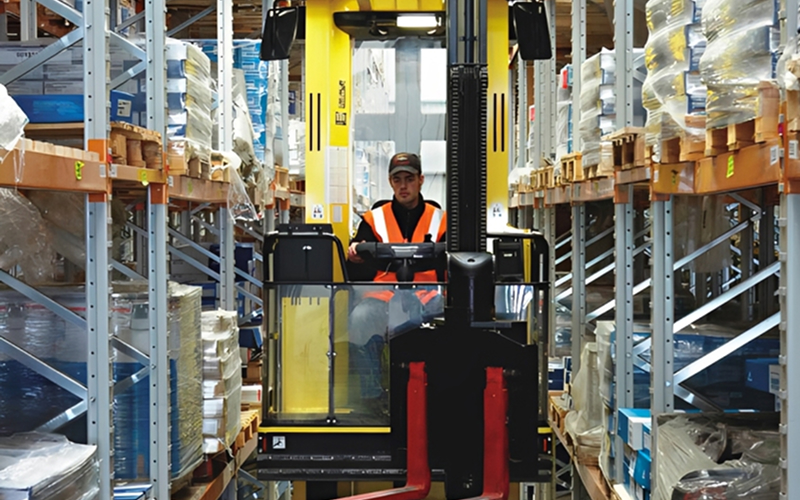
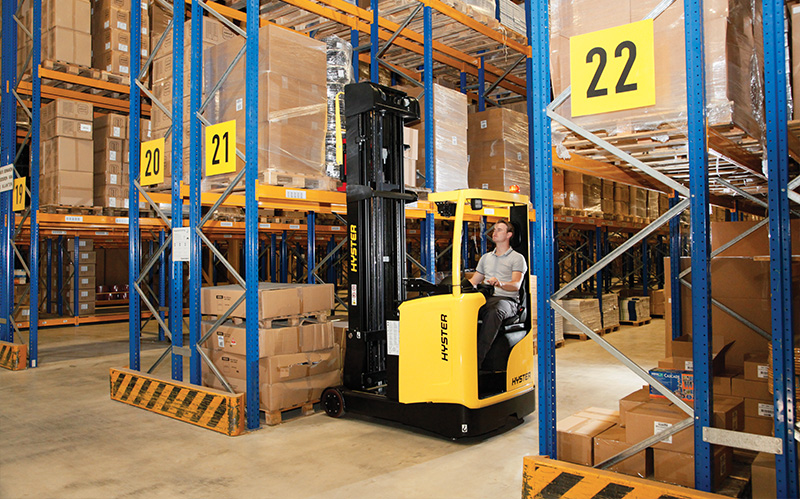
Narrow and very narrow aisles reduce floor space devoted to travel. When layouts are designed for high storage density, tighter clearances leave less room for turning and alignment. Equipment dimensions and steering characteristics become layout considerations.
Double-deep racking places one pallet behind another. It increases density, but rear pallets are less accessible. You may need extended-reach trucks, while inventory rules must account for access sequence.
Drive-in or drive-through racking reduces aisle requirements by letting a truck enter the rack structure. It can suit larger quantities of similar stock, although access is lower. Stock rotation, lane assignment and visibility matter.
The right choice depends on your inventory profile. With many fast-moving SKUs, direct access may matter more than maximum pallet count. With fewer product lines in deeper quantities, density may carry more weight. We assess storage and movement frequency, as well as the material handling equipment needed to access each pallet position, before committing to a layout.
How Does Higher Storage Density Affect Your Warehouse Equipment?
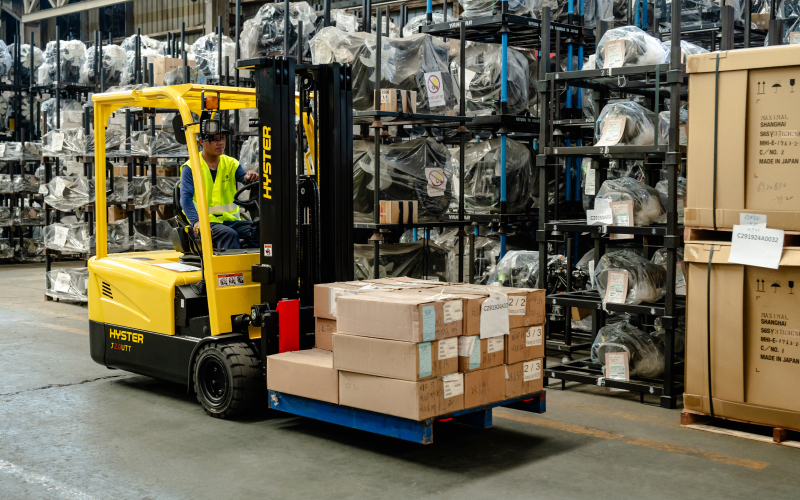
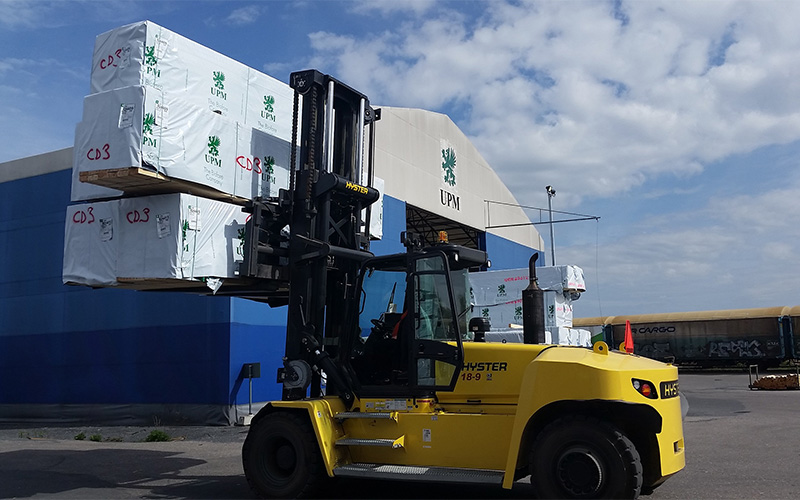
Taller racks and tighter aisles change equipment roles. A counterbalance forklift may suit loading bays and open floors, yet become inefficient between racks. Reach trucks are better suited to narrower aisles and higher pallet placement.
Very narrow aisle trucks can support tighter configurations where space is the priority. Their value still depends on the environment. The right truck still needs suitable floor conditions, guidance and pallet profiles.
Horizontal movement also matters. Pallet trucks can move loads between receiving, staging, picking and dispatch without tying up a reach truck for travel that does not require high-level lifting. Stackers may suit lower or medium storage heights where a full-sized forklift adds unnecessary footprint.
This is why high-density warehouse storage often works better with a mixed fleet. We can assign specialised trucks to racking and use dedicated transfer equipment for horizontal movements. That keeps the right machine in the right zone instead of expecting one truck to do everything.
Equipment suitability must also sit within your safety responsibilities. Singapore’s workplace safety requirements for machinery and equipment include forklifts within machinery and equipment covered by the WSH Act, so layout changes should be reviewed alongside safe use, training and risk controls.
How Can You Maintain Productivity in a Higher-Density Warehouse?
Adding pallet positions does not automatically improve warehouse storage efficiency. Denser layouts can reduce passing room, increase travel coordination and create more replenishment work. We therefore look at throughput, not only how many locations fit on a drawing.
When Density Can Create Bottlenecks
With high-density warehouse storage, bottlenecks can appear when movement patterns are not redesigned alongside the racking. Narrow aisles may prevent passing. Double-deep lanes can delay rear-pallet access. Fast-pick locations may need more frequent replenishment. Existing trucks may no longer match the new aisle width or lift height.
We test these pressure points at peak hours: how often pallets enter each zone, where trucks queue, which loads need priority access and how long specialised equipment spends travelling rather than lifting. That shows whether added storage helps flow or concentrates traffic.
Where Rentals Can Help
During a seasonal peak, relocation or layout transition, rental can add capability without changing the permanent fleet. You might add a reach truck for higher rack levels or transfer equipment to keep inbound and dispatch moving. At Hyster-Yale Lift Trucks Singapore, we offer short-term and long-term equipment rental alongside sales and fleet support.
If you are comparing forklift rental options in Singapore, start with the task rather than the truck category. Define lift height, load weight, aisle conditions, operating hours and charging windows. We can then match temporary equipment to the duty instead of adding capacity that creates another mismatch.
When to Review the Permanent Fleet
Rental is useful while demand is temporary or while you validate a new operating pattern. Once tighter aisles, higher racking or increased throughput become permanent, repeated temporary hires may signal that your fleet needs a broader review.
At that point, we reassess utilisation by zone, truck hours, travel distances, replenishment demand, charging arrangements and maintenance needs. The aim is not replacement for its own sake. It is a fleet that supports your layout and the throughput you expect to sustain.
Conclusion
If you are planning high-density warehouse storage, your equipment requirements should be reviewed before the rack design is finalised. Aisle widths, rack heights, pallet loads, shift patterns and movement priorities all affect whether reach trucks, stackers, counterbalance forklifts or transfer equipment are the right fit.
At Hyster-Yale Lift Trucks Singapore, we can assess these operating requirements and recommend an equipment mix for purchase or rental. Contact our team to review your warehouse layout and equipment requirements before finalising your storage configuration.