0
0
What Should Be on Your Forklift Maintenance Schedule?
Key Takeaways
- Treat maintenance as a planned routine, not a response to breakdowns.
- Combine daily operator checks with technician-led preventive servicing.
- Adjust service intervals for operating hours, environment, loads, and shift intensity.
- Use service records to decide when repairs still make commercial sense.
Introduction
Forklift maintenance is easier to control when you treat it as a schedule rather than waiting for a warning light or breakdown. The strongest programmes combine checks at the start of every shift with planned servicing by trained technicians. That helps you catch visible problems early while addressing wear that operators cannot always detect.
A clear schedule helps you reduce unplanned stoppages, plan servicing intervals more predictably, and prepare for parts or maintenance needs before they disrupt operations. You know which checks belong to operators, which tasks need technical attention, and when each truck is due for service. An unexpected repair can disrupt loading windows, production flow, and the use of other industrial warehouse equipment.
1. What Should Be Checked Before Every Forklift Shift?
Daily checks are the first layer of forklift maintenance. Before the truck enters service, we recommend checking forks, mast sections, lift chains, load backrests, tyres, wheels, brakes, steering, horn, lights, warning devices, hydraulic hoses, and operator restraints. The aim is to identify damage, leaks, wear, or response changes before work begins.
On an electric forklift, check battery condition, charge level, cables, connectors, and visible damage. Internal combustion trucks need applicable fluid checks too. Operators do not need to become technicians. They need a disciplined method for spotting abnormalities early and reporting them clearly.
If a defect affects safe operation, the truck should not remain in service until the next planned visit. Faults should be reported promptly and assessed by qualified personnel before the truck returns to work. Singapore’s workplace safety framework includes forklifts among machinery covered by the WSH Act, reinforcing the importance of disciplined equipment checks.
2. What Does Regular Preventive Forklift Maintenance Include?
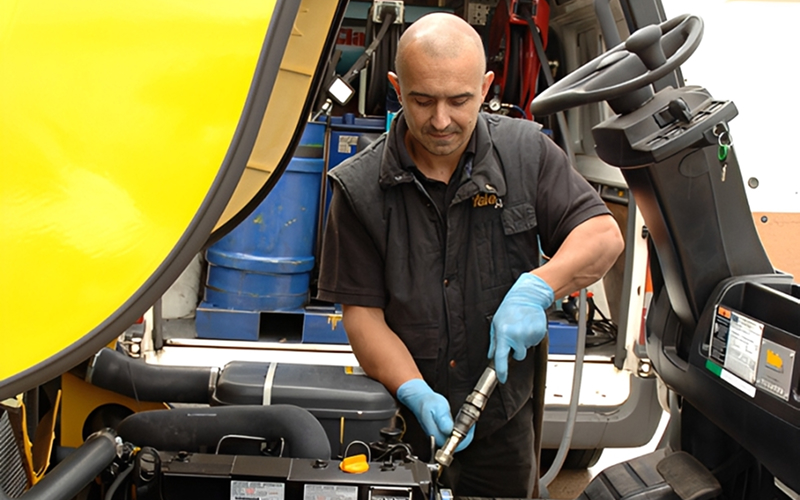
Daily inspections cannot replace forklift maintenance carried out at scheduled service points. Preventive servicing goes deeper into manufacturer-specified systems and items. This can include lubrication, oil and filter changes, brake and steering inspection, hydraulic checks, mast and lift-system assessment, battery and electrical checks, chassis inspection, and wear-related adjustments.
Effective maintenance of forklift components means treating the truck as an interconnected system. A worn chain, loose electrical connection, fluid leak, tyre issue, or brake adjustment may appear small, but each can affect availability or place extra strain elsewhere. A structured visit gives technicians time to inspect those relationships.
Our service approach matches maintenance tasks to the individual make and model, manufacturer requirements, usage intensity, and site conditions. Hyster-Yale Lift Trucks Singapore supports customers through scheduled maintenance, its 3+1 Preventive Maintenance Package, and genuine parts support within its aftermarket offering. For you, the value is planned attention instead of reactive repair.
3. How Often Should a Forklift Be Serviced?
There is no single forklift maintenance frequency that fits every operation. Manufacturer recommendations are the starting point, but operating hours and conditions shape it. A clean-warehouse truck on occasional shifts wears differently from one working long hours in a dusty plant, cold room, loading yard, or multi-shift centre.
We look at daily utilisation, load intensity, ramps, uneven surfaces, dust, moisture, corrosive exposure, impacts, and shift patterns. Higher utilisation means service hours accumulate faster, while harsh environments can accelerate wear. We build programmes around the application, truck model, and site conditions rather than a calendar-only rule.
Your schedule should also use operator feedback. Repeated tyre damage, steering changes, unusual noises, slower lift response, or declining battery performance should influence the next inspection rather than waiting for a predetermined date.
4. Which Forklift Components Need the Closest Attention Over Time?
Braking, steering, hydraulics, and the lifting system deserve consistent attention because deterioration can affect availability and safe operation. During forklift maintenance, we also consider the battery and electrical system, lift structure, chassis, drive components, tyres, controls, and safety features. This helps reveal how operating conditions are influencing wear, where stress is accumulating, and whether the truck remains suitable for the site.
Power source matters. Electric trucks need attention to battery health, connectors, charging performance, and electrical condition. Combustion-powered trucks add engine fluids, filters, and powertrain items. A reliable forklift parts supplier matters because repair speed depends on identifying the fault and obtaining the correct component promptly.
Maintenance records reveal patterns that one inspection cannot. Repeated hydraulic repairs, recurring tyre damage, frequent impacts, or abnormal wear may point to floor conditions, operator practices, truck specification, load profile, or equipment suitability. We use those patterns to distinguish one-off faults from wider operational issues.
5. When Should You Repair or Replace a Forklift?
Knowing when to replace forklift units is a commercial decision, not one based on age alone. We look at whether breakdowns are becoming more frequent, repair costs are rising, parts are harder to source, or downtime is interfering with productivity. We also consider whether it still matches current load weights, lift heights, travel distances, aisle conditions, and operator needs.
A well-maintained truck with moderate utilisation may remain economical for years. A heavily used unit in a demanding application can reach the end of its practical service life sooner. Compare repair frequency, service spend, operating hours, parts lead times, and lost availability. Together, these maintenance and cost patterns can give you a clearer basis for judging whether continued repair still makes commercial sense.
Replacement can also make sense when your operation changes. A truck selected for yesterday’s layout may no longer suit new racking, higher throughput, longer shifts, heavier loads, or different charging arrangements. Continuing to repair it can preserve an equipment mismatch rather than solve the underlying productivity issue.
Build a Maintenance Plan Around How You Actually Operate
Review your fleet truck by truck, not simply by service date. At Hyster-Yale Lift Trucks Singapore, we can assess operating hours, application demands, charging or fuel requirements, recurring repair patterns, service history, parts needs, and site conditions before recommending an appropriate maintenance approach. Our factory-trained technicians and structured service options, including the 3+1 Preventive Maintenance Package, can help you plan servicing earlier, reduce downtime, and make clearer repair-versus-replacement decisions.
Speak with our team to review your current maintenance schedule, recurring service issues, charging or fuel requirements, and parts needs, so we can help you determine the right servicing approach for your fleet.