0
Reachstacker vs Container Handler: What Does Your Yard Operation Need?
Key Takeaways
-
The right machine depends on how containers move through your yard, your stacking requirements, available space and throughput demands.
-
Variable access, multiple rows and changing yard tasks favour flexibility; repetitive flows can favour dedicated equipment.
-
A machine’s stated capacity should not be considered alone; container weight, stacking height, residual capacity, travel distance and ground conditions also matter.
-
The best selection should support productivity, safe traffic movement and a practical long-term fleet plan.
Introduction
A reachstacker and a dedicated container handler can both move containers, yet they solve different access, stacking and travel problems. Choosing between them starts with how containers flow through the yard, including row depth, access points and transfer routes.
At Hyster-Yale Lift Trucks Singapore, we normally assess container type, weight, stacking height, row depth, travel distance and handling frequency before discussing a specific machine. We also look at whether one truck must serve several zones or remain dedicated to a defined task.
Our approach is simple: equipment selection should reduce operational friction rather than force your yard to work around the truck. We also support fleet consultancy, rental and aftermarket needs alongside equipment supply.
How Do the Two Machine Types Differ?
A reachstacker lifts from the top using a telescopic boom and spreader. Because the boom extends, the machine can access containers beyond the first row in suitable layouts. This can improve access to containers behind the front row and reduce some repositioning during certain yard movements.
Dedicated handlers, by contrast, are designed around container work and may be configured specifically for loaded or empty containers, depending on the model and application. A dedicated handler can be highly productive in a repeatable duty cycle, but less adaptable when the yard demands several different movements.
The key distinction is not simply “flexible versus specialised”. It is how the machine accesses a box, where it can place it, and how predictably it repeats that movement. Your container handling equipment should therefore be matched to the operating pattern, rather than chosen from capacity figures alone.
When Does Flexible Yard Equipment Make More Sense?
A reachstacker becomes attractive when one machine must cover several movements. You may be transferring boxes between storage and loading areas, working across more than one row, serving changing transfer points, or supporting intermodal activity where the operating pattern shifts through the day. In these environments, the ability to approach different positions can reduce the need to organise the whole yard around one fixed sequence.
This flexibility matters when your site has competing demands. A truck may need to move from receiving to staging, then support loading elsewhere. It may also need to work around other material handling equipment rather than occupy a single dedicated lane. We would still check turning room, traffic interaction, surface condition and travel distance before treating flexibility as an automatic advantage.
When Is a Dedicated Container Handler More Suitable?
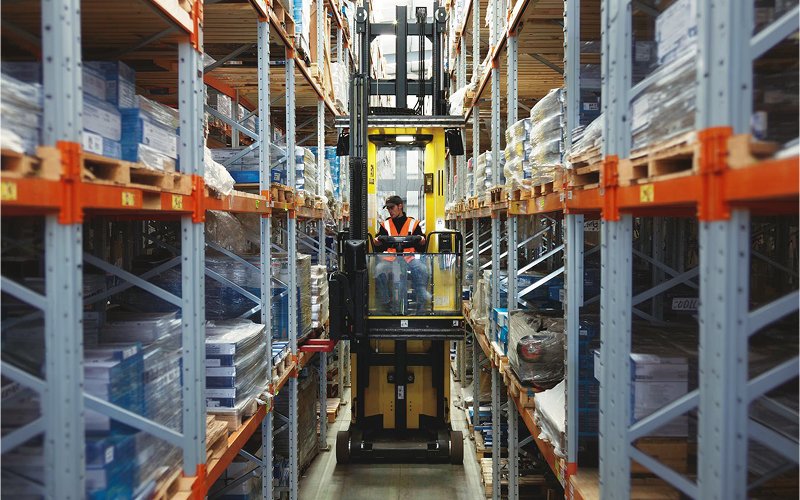
Dedicated handlers suit consistent tasks that can be matched closely to the machine. Empty-container models are designed around lighter loads and high stacking requirements, while loaded-container models address substantially heavier work. That distinction matters because “handling containers” is not one duty cycle.
If the same container type follows predictable routes between clearly defined areas, specialised equipment can support a disciplined process. High-volume container stacking may also favour a machine selected around that repetitive pattern. We therefore ask whether the added flexibility of a reachstacker creates real operational value or simply adds capability the operation rarely uses.
How Do Container Weight and Stacking Height Affect the Choice?
Start with the heaviest and most demanding lift you genuinely expect. Maximum container weight, dimensions, required stacking height, row position, spacing and lift frequency all influence selection. A reachstacker that can lift a load at ground level does not automatically have the same usable capacity when the boom is extended, or the container is placed higher and further away.
That is why we focus on residual capacity at the required operating position, not only nominal capacity. Your specification should reflect real combinations of reach and height. When planning container yard equipment, we also consider the operating geometry of the site, because traffic lanes, transfer points and stacking patterns determine where the truck must work.
How Does Yard Layout Influence Equipment Selection?
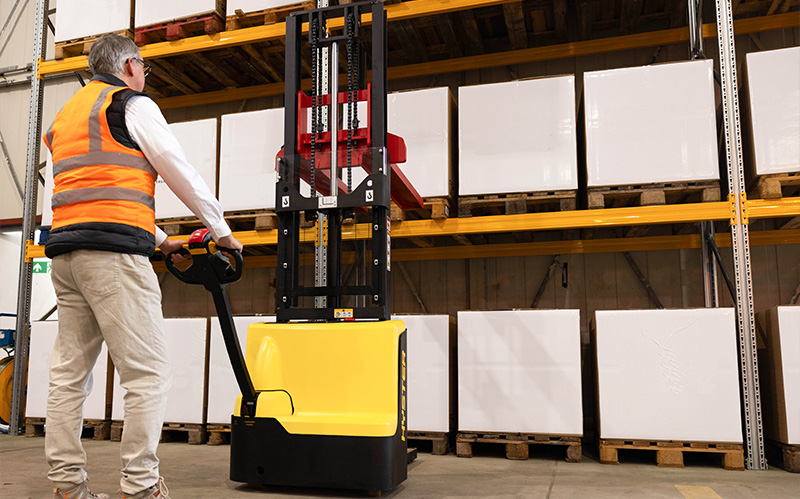
A yard is part of the equipment decision. Multiple rows, changing storage blocks and several transfer areas can reward flexible access. Defined lanes and repeatable routes can favour a dedicated handler. We map turning space, ground conditions, travel distances, truck traffic, staging areas and access to loading points before deciding which operating pattern is more efficient. Where container routes intersect with warehouse or loading areas, we also assess how pallet trucks and other supporting vehicles enter, cross or share those routes.
Safety belongs in the same conversation. Singapore’s MOM has emphasised the importance of proper traffic management at workplaces where vehicular hazards are present. In practical yard planning, that means looking at vehicle interactions, visibility, pedestrian separation and traffic controls alongside productivity. A machine that meets the stacking requirement but creates awkward circulation is not a complete solution.
Which Machine Does Your Operation Need?
A reachstacker may make sense when daily movements vary, containers sit across more than one row, the truck must serve several yard functions, or layouts change with different workflows. A dedicated container handler may make sense when movements are repetitive, routes are defined, stacking volumes are high, and the machine can be specified for loaded or empty boxes without needing to cover unrelated tasks.
The commercial decision should extend beyond purchase price. Consider utilisation, maintenance access, operator requirements, expected changes in throughput and whether rental could support seasonal peaks or a new operating pattern before you commit. We also consider whether fleet management services can help you track utilisation and plan equipment requirements more deliberately.
Conclusion
If you are deciding between these machine types, bring us your container weights, stack plan, row depths, travel routes, peak movement volumes and expected changes in the yard.
At Hyster-Yale Lift Trucks Singapore, we can review the duty cycle with you, identify where flexibility or specialisation adds value, and match the equipment to the work you actually need to perform. That gives you a clearer basis for building a container-handling fleet around uptime, access and operational priorities.
Speak with us to review your yard requirements and identify the most suitable container-handling equipment for your operation.