0
0
Are Your Forklift Operations Compliant? Key Rules to Keep in Mind
Introduction
Forklift compliance in Singapore is not limited to whether an operator has completed a course. Employers must also consider truck condition, daily checks, maintenance, workplace traffic controls, records, and, where a truck enters a public road, separate Land Transport Authority (LTA) requirements. Because these obligations span workplace safety and road-use rules, forklift regulations are easier to manage when you review responsibilities together. In this guide, we explain the main requirements to check and where each rule applies.
Key Takeaways
-
MOM and WSH requirements focus on trained and authorised operators, safe equipment, maintenance, safe driving practices, and workplace traffic management.
-
From 1 January 2027, forklift operators must complete refresher training at least once every three years, and operators of forklifts above 5 tonnes must also complete the Heavy Forklift Course.
-
LTA requirements are a separate consideration when an engineering plant is intended to be used or driven on public roads.
1. What Are the MOM and WSH Requirements for Forklift Operations?
For most warehouses, forklift regulations begin with the duties that apply inside the workplace. The practical focus is on operator competency, the truck’s condition and suitability, how it is used, and how vehicle and pedestrian movements are controlled.
Operator Training
All forklift operators must complete the WSQ Operate Forklift Course. Operators handling forklifts above 5 tonnes must also attend the Heavy Forklift Course. From 1 January 2027, employers must ensure operators attend refresher training at least once every three years. This means forklift operator training should be tracked as an ongoing competency requirement, not treated as a one-time record.
Businesses should keep training records current and make sure operators are authorised for the equipment they use. Site-specific instruction may also be needed where operating conditions, attachments, loads, or traffic patterns introduce hazards that are not covered by the basic course alone.
Pre-Use Checks and Maintenance
Check the forklift before use so you can identify defects that affect safe operation before the truck enters service. Checks may cover items such as steering, brakes, tyres, forks, the mast, warning devices, lights, and other safety-related components, depending on the truck and manufacturer guidance.
Regular maintenance is equally important. Forklift safety requirements are not met simply by servicing a truck after a fault occurs. Preventive maintenance should follow the manufacturer’s recommendations, and operators should report and address defects that could affect safe operation before the truck returns to service.
Safe Forklift Operation
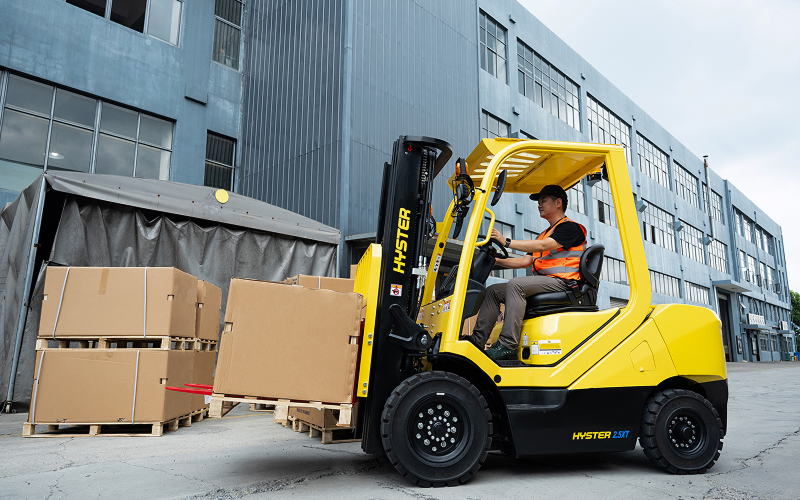
Safe forklift operation includes practical controls throughout the shift, such as fastening the seat belt, observing workplace speed limits, slowing at corners and blind spots, giving way to pedestrians, keeping loads low while travelling, and checking the direction of travel before reversing.
These controls work best when they are supported by supervision and a clear process for reporting unsafe conditions. A technically serviceable truck can still create risk if it is overloaded, used for an unsuitable task, or operated where visibility and pedestrian separation are poor.
Workplace Traffic Management
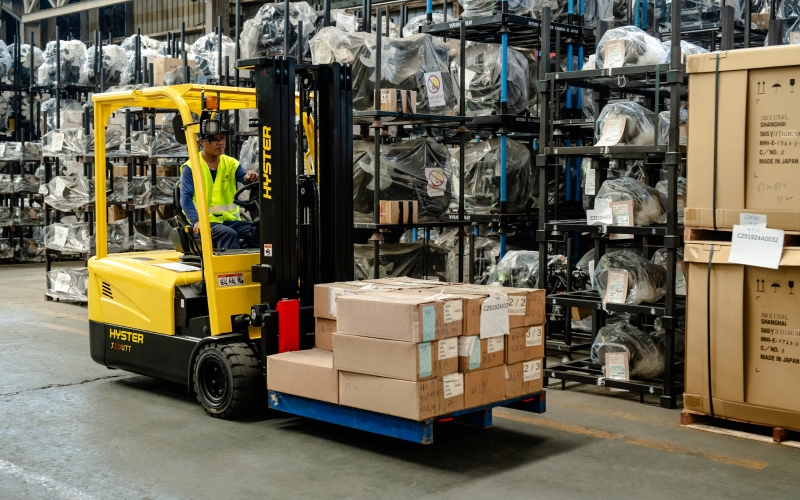
Workplace traffic management should also account for the space in which forklifts operate. Where practicable, separate pedestrian and vehicle routes, control crossings and blind corners, and keep travel paths clear of stored goods or temporary obstructions. This is especially important where material handling equipment in the warehouse shares routes with pedestrians, loading zones, or staging areas.
Review traffic arrangements when racking, storage density, loading patterns, or workflows change. Forklift regulations therefore need to be considered alongside the actual movement of people, trucks, and goods, rather than treated as a set of documents that remains unchanged.
2. What LTA Requirements Apply to Forklifts?
Forklift regulations can also extend beyond workplace safety when a truck is intended to enter a public road. Engineering plants must be registered before they can be used or driven on public roads, but registration does not automatically mean that every engineering plant may travel on every public road.
Businesses should therefore check the specific forklift, intended route, and road use to determine whether registration, inspection, technical requirements, or other permissions apply.
A forklift that stays entirely within a private warehouse or industrial site usually has a different compliance focus. If you plan public-road use, check the requirements for that truck and use case rather than assuming workplace rules alone are sufficient.
3. Your Forklift Compliance Checklist
A warehouse forklift compliance review is most useful when it reflects how the site actually operates. The following questions can help identify gaps before they become recurring operational or safety problems.
Operators
- Have operators completed the required courses and any refresher training that applies?
- Are operators authorised and competent for the trucks and tasks assigned to them?
- Are training records and refresher dates easy to verify?
Equipment
- Are pre-use inspections completed consistently, with defects reported promptly?
- Are unsafe trucks removed from operation until the relevant issue is assessed?
- Is preventive maintenance carried out at suitable intervals?
- Are the lift trucks, attachments, load capacities, configurations, and replacement forklift parts appropriate for the task?
Warehouse Environment
- Are pedestrian and forklift routes clearly managed?
- Are blind corners, crossings, loading zones, and high-traffic areas controlled?
- Have traffic arrangements been reviewed after layout or workflow changes?
Records and Review
- Are maintenance and inspection records kept up to date?
- Are recurring defects, equipment damage, and near misses being reviewed?
- Are risk assessments revisited when equipment, layouts, or operating conditions change?
A checklist should support what happens on the floor. Forklift regulations are only effective when procedures, equipment condition, operator behaviour, and the workplace layout remain aligned in day-to-day operations.
Conclusion
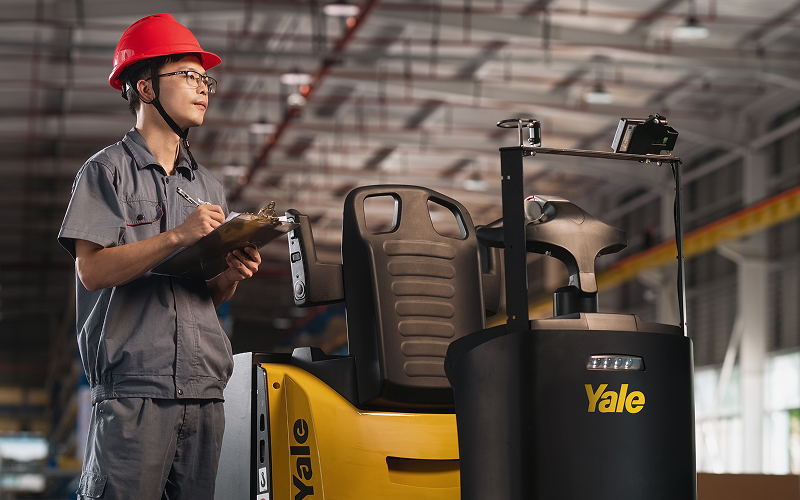
Forklift compliance in Singapore spans operator competency, safe operation, maintenance, workplace traffic management, and, in some cases, separate LTA requirements for public-road use. Keeping these areas connected makes it easier to identify where a training record, equipment issue, site layout, or maintenance gap needs attention.
For businesses comparing forklift suppliers in Singapore, after-sales maintenance and parts support should also be part of the review. At Hyster-Yale Lift Trucks Singapore, we support Hyster and Yale lift trucks through preventive maintenance, health and safety checks, genuine parts, and technical support. If you are reviewing the equipment side of your compliance obligations and want to discuss maintenance or truck condition, contact us to review your operational requirements.